Above, one of three mounds at the Seneca Meadows Landfill in Waterloo, NY, as seen from the west side of Seneca Lake approximately eight miles away (through a telephoto lens). Credit: Kevin Colton, HWS.

EPA Region Map

EPA Region Map
EPA Region Map

Sunday, February 6, 2011

Dirty Money


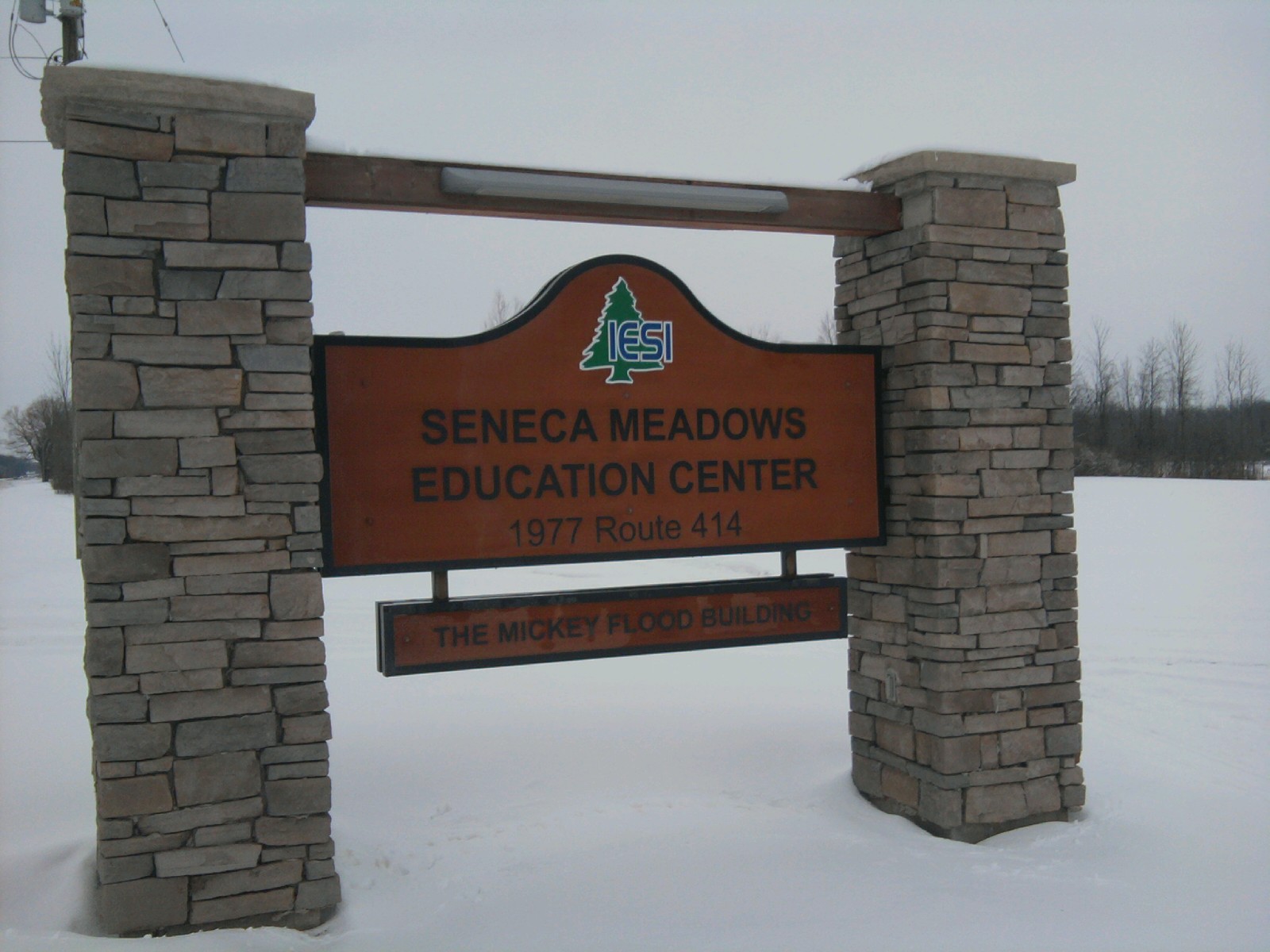
Today I went to my home in Waterloo to watch the Superbowl with my family. As we have discussed in class, Waterloo is home to one of the two massive area landfills, Seneca Meadows. One of the biggest things I have been witness to growing up in the area, is the influence of Seneca Meadows in our community. The landfill funnels "beneficial funds" into our little league teams, and educational programs, as well as provides jobs which the more ignorant portion of our population sees as generous and necessary. They do so in exchange for our quiet duplicity. Now as a more educated citizen, I see through the ways in which they sustain themselves as a buisness that literally trashes one of our most valuable assets, our environment. These photos were taken on February 2nd, 2011 on Route 414 in Seneca Falls, NY. They are photos of the Seneca Meadows Education Center. The Center is a friendly front for an evil business. According to their website they offer cooking and wine making classes as well as programs for high school teachers to bring their classes to. And it all takes place in an "earth friendly" building... It's really great to know that Seneca Meadows is in support of a clean environment.


These are two pictures that I took while studying abroad in Aix-en-Provence, France, in the spring of last year. This fountain is in the center of the city and as you can see in the picture on the left, there is usually a lot of water in this fountain (which operates 24 hours a day, 7 days a week). Yet on the day that the second photo was taken, the water stopped flowing and the fountain was drained. This picture was taken after a large parade had just taken place to celebrate Carnaval. Not only is there trash along the base of the fountain, but there was so much trash in the fountain itself, that the city had to drain it and clean it out. After the parade had ended, about one hundred people rushed the fountain and jumped in, and continued the celebrations in the fountain itself. So there was trash, confetti, silly string, bottles, articles of clothing and so much more left in the fountain. I was there when the sanitation workers began to clean and I returned back four hours later to see the workers had cleaned the first two tiers of the fountain.This last picture is, as you can see, a picture of more sanitation workers attempting to clear the streets of confetti and trash so that the traffic that normally circulates around the fountain could begin again. For weeks after the parade, I could still see confetti and trash that was left over. The city that I studied in was normally very clean and there was little trash if any on the streets, but little things such as confetti, escaped the brooms of the sanitation workers in Aix for weeks.

Cushy...


The first photo is of a bed rest pillow that was sitting in a garbage bag waiting to be picked up by housekeeping. I was curious as to what prompted the owner to throw it away. Upon further inspection, I found a small seam tear that I was able to sew with three stitches and now it has been put to use in my own room. The other photo is of the box and all of the packing that my new mini fridge (1.7 cubic feet) came in. I had to purchase a new one after my one year old fridge bit the dust. These two photos of the "ripped" pillow and my fridge that arrived in a over padded box to replace only a year old fridge, show just how easy it is for things to be discarded or replaced in our "throw-away society".

Saturday, February 5, 2011

It Starts at Home


For my first post I thought I would start with what produces a significant amount of garbage, which is acquisition and consumption. With that said, I figured what better place to start than my own house. Thus, both of the following pictures were taken at my house just a couple days ago in February 2011. The first shows the result of my parent’s typical grocery shopping trip. It looks like a lot and it is, however I have an unusually large household and it gets used up relatively quickly. Although a lot could potentially be thrown away in the end, the second picture shows that most of what is there, including bags, bottles, cans, boxes, etc., is made of recyclable material. Therefore, we try to significantly reduce our contribution to the growing garbage problem by taking the time to recycle these items so they can be made into something else and reused rather than poured into the landfill. Hopefully by doing this we each produce less garbage than the average, which is around 4 pounds per person per day.


Friday, February 4, 2011

Both of these pictures were taken at the Ontario County Landfill here in New York, off of routes 5 & 20. I went here with a class in high school in 2009. The first picture was taken at the top of the landfill where we drove on the school bus to the top right behind the garbage trucks. We got to see everything that isn't visible from the road which was very eye-opening. We were surrounded by tons of reeking garbage, loud trucks, and hungry seagulls. I thought it was sad to see so many plastic bags throughout this mountain of trash as well as many other recyclable items. The second picture I thought was a perfect example of this place being a "mountain" of garbage. It is also a quite depressing and lifeless picture at the same time, perfect for describing a landfill. Actually being there put things into perspective for me about the process it takes for my garbage to get to a landfill and that it still exists. Seeing how much trash was brought in during the few hours we were there motivated me to reduce the amount of waste I produce.

Thursday, February 3, 2011

Invisible?


Last semester I was abroad in Australia and while I was abroad I took several thousand pictures. For my first post I decided to look through all of my pictures to see if any of them had any trash pictured in them. I found none, instead a large number of them had trash/recycling cans in the background. While most of my pictures were of wildlife or natural landscapes well away from much human contact. I would say that most of the pictures taken in cities or towns had trash or recycling cans in them. Above are two such pictures, the first is a shot of Manly Beach which is a well known beach outside of Sydney. The other is a shot of the Opera house taken from the botanical gardens. What is most interesting about these shots is that the pictures are not of the trash cans, however because trash is such a part of modern/urban life I didn't even notice them as I was taking the picture. The trash cans were invisible to me. When I realized this I went back and counted all of the trash cans in total I have 20 trash cans in all of my study abroad photos.

Tuesday, February 1, 2011

Unnecessary? [Updated: Vacuum]


Since returning to campus this winter, there has been a couch, chair and table (?) outside my house (theme house).  One morning, B&G came by with a backhoe to remove it.  It had apparently been thrown out of a window and a table or part of the chair was stuck in the tree.  The video shows a backhoe getting the piece out of the tree, and in the process breaking a large branch.  It surprised me that people would just throw seemingly ok pieces of furniture out of the window, rendering them useless (although there may be an explanation).  It was also a huge process to get the backhoe up to the house to remove the "trash"... seems like a waste of energy when it could have easily been carried to the curb and picked up by a truck there.  Was all of this really necessary?